

Why Snow Removal Liability Matters More Than You Think
Every winter, property owners and managers across Ontario face a risk that has nothing to do with the weather itself: legal liability for slip-and-fall injuries on their property.
A single slip-and-fall claim in Ontario can result in settlements or judgments ranging from $25,000 to well over $500,000, depending on the severity of the injury. Broken hips, traumatic brain injuries, spinal damage — the medical reality of a fall on ice is often far worse than people imagine. And the legal reality is equally harsh: the property owner or manager is almost always the first person named in the lawsuit.
This guide explains the legal framework that governs snow and ice liability in Ontario, what your obligations actually are, and how professional snow removal with proper documentation is the single most important step you can take to protect yourself.
The Occupiers' Liability Act: Your Legal Duty
In Ontario, premises liability is governed by the Occupiers' Liability Act (OLA). The Act imposes a duty on every "occupier" of premises to take reasonable care to ensure that people entering the property are reasonably safe.
An "occupier" isn't just the property owner. It includes anyone who has physical possession or control of the premises — that means tenants, property managers, and in some cases, contractors. If you control the property, you owe a duty of care to:
- Tenants and residents
- Visitors and guests
- Delivery personnel and postal workers
- Emergency responders
- Anyone lawfully entering the property (and in some cases, even trespassers)
The standard is "reasonable care in all the circumstances." Courts look at what a reasonable property manager would have done in the same situation. If a storm drops 15 cm of snow and you waited two days to clear your property, that's not reasonable. If freezing rain created a sheet of ice on your walkway and you did nothing, that's not reasonable.
What "Reasonable" Looks Like in Practice
Ontario courts have consistently found that "reasonable care" for winter maintenance includes:
- Timely snow removal after every snowfall event
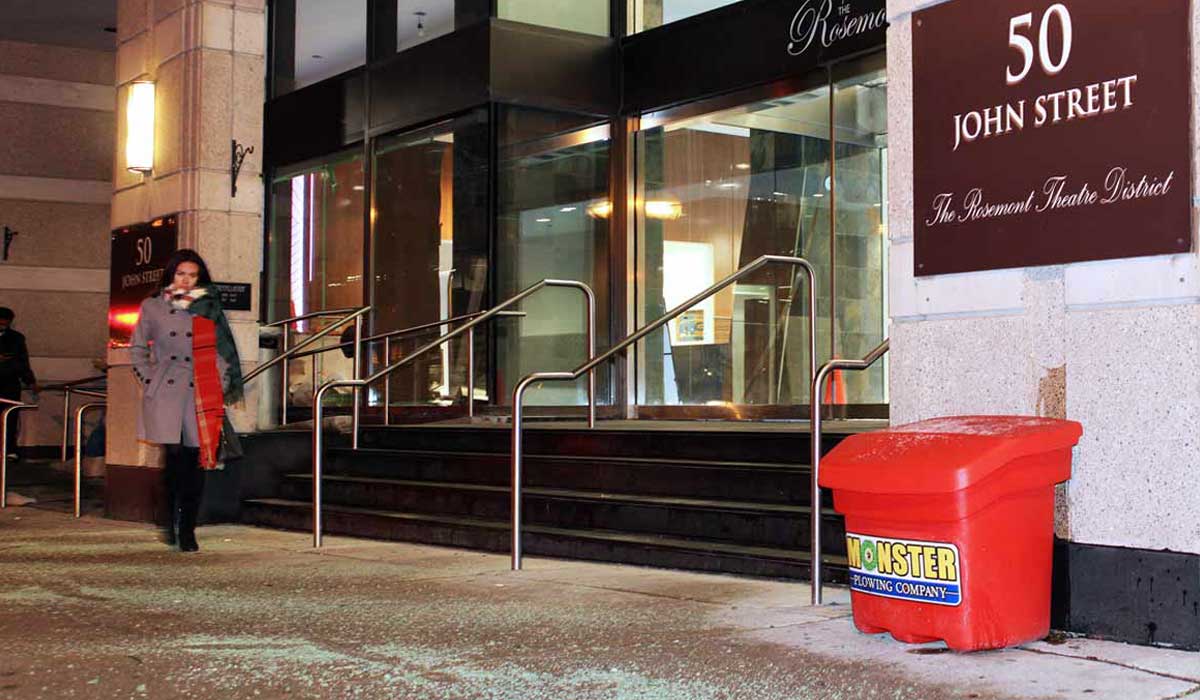
- Deicing application on walkways, entrances, parking areas, and stairs
- Monitoring weather conditions and responding proactively — not just reactively
- Documenting service — keeping records of when snow was cleared and deicing was applied
- Inspecting the property after clearing to ensure conditions are safe
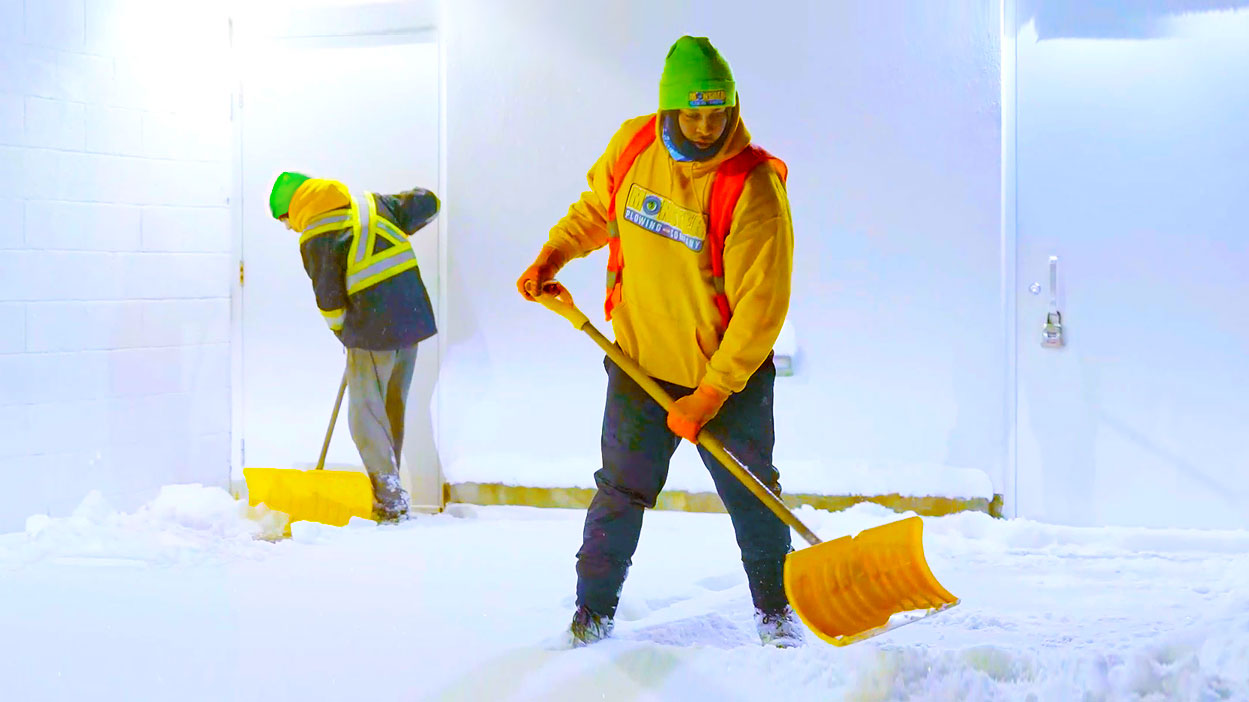
A flat-rate seasonal contract with automatic dispatch — like Monster's — meets every one of these standards by design. Service triggers automatically at 1 cm accumulation, Green Ice Melter is applied after every visit, and every service is GPS-tracked with timestamped logs.
Toronto's 12-Hour Bylaw
Beyond the OLA, the City of Toronto has its own municipal bylaw requiring property owners to clear sidewalks adjacent to their property within 12 hours after a snowfall ends. This applies to all properties — residential and commercial.
Non-compliance can result in:
- Fines — the City can issue tickets for uncleared sidewalks
- City clearing at your expense — if the City clears your sidewalk, you'll receive a bill (often $200-500+)
- Strengthened liability claims — a bylaw violation is powerful evidence in a slip-and-fall lawsuit. It demonstrates a failure to meet even the minimum legal standard.
Monster's Priority Package guarantees service completion before 5:59 AM — well within the 12-hour window for overnight storms and before most foot traffic begins.
Bill 118: Broader Liability for Building Owners
Ontario's Bill 118 (the Occupiers' Liability Amendment Act) and related legislation have strengthened the duty of care for property owners, particularly for commercial and multi-residential properties. Courts have increasingly held that building owners cannot simply delegate their liability to a snow removal contractor and walk away.
This means:
- Hiring a contractor doesn't eliminate your liability — it reduces your risk, but you must ensure the contractor is competent, insured, and performing to the standard of care
- You need documentation — if a claim is filed, you need to prove that your contractor actually performed the work, when they performed it, and what they did
- Your contract matters — the terms of your snow removal contract (response time, accumulation trigger, deicing, scope of work) become evidence in litigation
What Happens When Someone Slips and Falls
Understanding the legal process helps you understand why documentation and professional service are so critical:
1. The Incident
Someone slips on ice or packed snow on your property and is injured. This could be a tenant, a visitor, a delivery driver, or a passerby on the adjacent sidewalk.
2. Notice Requirements
Under Ontario's Municipal Act, a person who is injured due to snow or ice on a municipal sidewalk must give the municipality written notice within 10 days (for municipal claims). For private property claims under the OLA, there is no formal notice requirement — the injured party can simply file a lawsuit.
However, the practical reality is that most claimants (or their lawyers) will send a demand letter within 60-90 days of the incident. This letter typically demands compensation and threatens litigation.
3. The Limitation Period
In Ontario, the general limitation period for personal injury claims is 2 years from the date of the incident (under the Limitations Act, 2002). This means someone who slips on your property in January 2027 could file a lawsuit as late as January 2029.
This is why documentation matters so much. Two years after the incident, no one will remember exactly when the snow was cleared or whether deicing was applied. But GPS logs and timestamped service records don't forget.
4. Litigation
If the claim proceeds to litigation, the plaintiff's lawyer will typically:
- Name the property owner, property manager, and snow removal contractor as defendants
- Request all snow removal records, contracts, and communication
- Obtain weather data for the date and time of the incident
- Hire an expert to assess whether the standard of care was met
Properties with professional, documented snow removal service have a dramatically stronger defense. Properties with no contractor, or with a per-visit contractor who has no records, are exposed.
The Cost of a Claim vs the Cost of Prevention
Let's put the numbers side by side:
- Seasonal flat-rate snow contract (commercial): one fixed number for the whole winter, quoted per site — typically from the mid four figures to well into five figures depending on scope
- Average slip-and-fall settlement (Ontario): $25,000 - $150,000
- Serious injury judgment (hip fracture, TBI): $150,000 - $500,000+
- Legal defense costs (even if you win): $15,000 - $75,000
A single claim — even one that doesn't go to trial — can cost more than years of professional snow removal. And the reputational damage to a commercial property or management company can be even more costly.
How GPS-Tracked Service Protects You
The most powerful tool in defending against a slip-and-fall claim is proof that service was performed, when it was performed, and where.
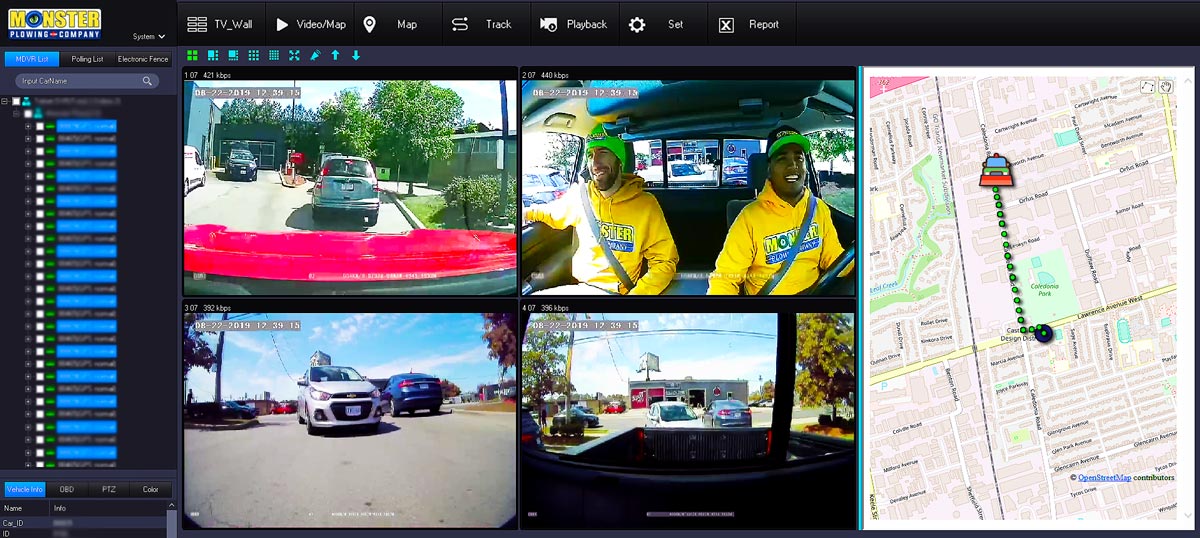
Monster Plowing Company equips every truck with GPS tracking. Every service visit generates a timestamped, geolocated record that shows:
- Arrival time at the property
- Service duration — how long the crew spent on-site
- Route path — the GPS track showing where the truck went on the property
- Departure time
- Green Ice Melter application — recorded as part of the standard service protocol
These records are stored digitally and available through the Client Portal. If a claim is filed two years after the incident, your property manager can pull the exact service record for that date and time — and present it to the plaintiff's lawyer or the court.
This is the difference between "we think we cleared it" and "here is the GPS record showing our truck arrived at 4:17 AM, spent 23 minutes on-site, and departed at 4:40 AM after applying Green Ice Melter to all walkways and entrances."
Why Automatic Dispatch Eliminates Liability Gaps
The most dangerous moment for a property manager isn't the blizzard — it's the borderline event. A light dusting. Freezing drizzle. A temperature swing that melts snow during the day and refreezes it overnight.
With per-visit snow removal, someone has to make the call: "Is this bad enough to send the contractor?" Every time you decide it isn't, you're accepting liability for whatever happens next. And "decision fatigue" in the middle of winter — when these events happen multiple times per week — is real.
Monster's flat-rate, automatic dispatch model eliminates this problem entirely. Our operations team monitors weather 24/7 and dispatches crews based on conditions, not phone calls. You never have to decide whether it's "bad enough." If conditions warrant service, our trucks are already rolling.
This isn't just convenient — it's a legal shield. In a liability claim, you can demonstrate that your snow removal protocol required zero human decision-making at the property level. The system is designed to respond automatically, and the GPS logs prove it did.
What to Look For in a Snow Removal Contract (Liability Perspective)
When evaluating snow removal contracts for liability protection, prioritize these elements:
- Accumulation trigger — Lower is better. A 1 cm trigger (Monster's standard) means service happens for even light snowfalls. A 5 cm trigger means your property sits covered for everything below that threshold.
- GPS tracking and documentation — Non-negotiable. If the contractor can't produce timestamped service records, they're useless in a liability defense.
- Insurance — Verify the contractor carries adequate Commercial General Liability (Monster carries $5M CGL). Ask for a certificate naming your property as additionally insured.
- WSIB coverage — If their workers aren't covered by WSIB, you could be liable for a contractor's employee injury on your property.
- Deicing included — Plowing alone doesn't address ice. If deicing is separate or optional, you have a gap in your liability protection.
- Automatic dispatch — If the contract requires you to call for service, you own the dispatch decision. Automatic dispatch shifts that responsibility to the contractor.
Read our detailed guide on what to look for in a commercial snow removal contract for the full checklist.
Protect Your Property This Winter
Professional snow removal isn't just a convenience — it's risk management. The cost of a seasonal contract is a fraction of what a single slip-and-fall claim can cost, and the documentation that comes with GPS-tracked service is your strongest defense if a claim ever arises.
Monster Plowing Company has protected over 700 seasonal clients and 900+ sites across the GTA for over 18 years. Our zero-tolerance, flat-rate, fully documented service is designed to keep your property safe and keep you protected.
Get a free quote for the 2026-27 season. Or visit our packages page to compare our Complete Package and Priority Package. Don't wait for the first storm — or the first claim — to act.